Live prices · moment by moment
Gold Price Today in India (Indian rupee)
Price by karat
Prices are for raw gold before making charges. They are a guide, not an offer to buy or sell.
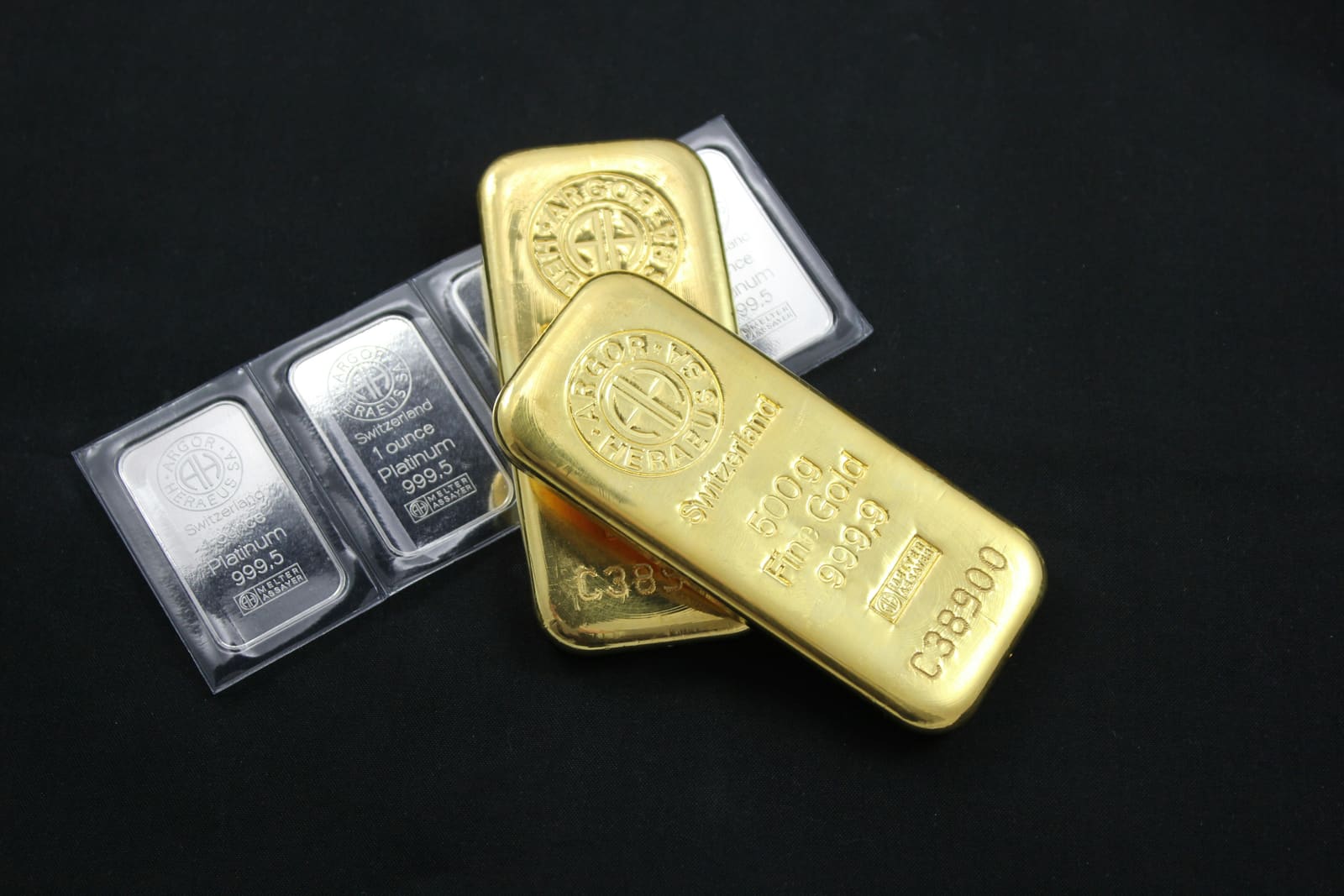
Gold bar prices today (24K)
The estimate includes the dealer's premium, which gets smaller as the bar gets bigger.
| Size | Raw value | Estimated price |
|---|---|---|
| 1 g | 12,294.80 INR | 13,524.28 INR |
| 5 g | 61,473.98 INR | 63,932.94 INR |
| 10 g | 122,947.97 INR | 126,390.51 INR |
| 20 g | 245,895.93 INR | 251,305.64 INR |
| Troy oz | 382,410.92 INR | 389,294.32 INR |
| 50 g | 614,739.83 INR | 623,960.93 INR |
| 100 g | 1,229,479.66 INR | 1,244,233.41 INR |
| 1 Kilo | 12,294,796.58 INR | 12,380,860.16 INR |
| Gold pound 8 g 21K | 86,063.58 INR | 88,645.48 INR |
Gold price yesterday and previous days
Closing prices of the last 7 sessions for each karat.
| Date | 24K | 22K | 21K | 18K |
|---|---|---|---|---|
| Nov 6, 2026 | 12,303.25 | 11,277.98 | 10,765.34 | 9,227.44 |
| Nov 5, 2026 | 12,419.79 | 11,384.81 | 10,867.32 | 9,314.85 |
| Nov 4, 2026 | 12,297.51 | 11,272.72 | 10,760.32 | 9,223.14 |
| Nov 3, 2026 | 11,897.16 | 10,905.73 | 10,410.01 | 8,922.87 |
| Nov 2, 2026 | 11,985.32 | 10,986.54 | 10,487.16 | 8,988.99 |
| Oct 30, 2026 | 11,771.86 | 10,790.87 | 10,300.38 | 8,828.89 |
| Oct 29, 2026 | 12,171.91 | 11,157.59 | 10,650.42 | 9,128.93 |
Values at today’s exchange rate (INR)
Gold forecast today: buy or sell?
For the long-term investor
Over 1 year
SellOver 3 years
Strong buyIndicator details
| Indicator | Value | Signal |
|---|---|---|
| RSI (14) | 46.98 | Neutral |
| Stochastic (14,3,3) | 70.94 | Neutral |
| CCI (20) | -7.58 | Neutral |
| ADX (14) | 21.12 | Sell |
| Awesome Oscillator | -103.77 | Neutral |
| Momentum (10) | 64.20 | Buy |
| MACD (12,26) | 11.69 | Buy |
| Stoch RSI Fast (3,3,14,14) | 95.40 | Neutral |
| Williams %R (14) | -31.02 | Neutral |
| Bull Bear Power | 35.74 | Neutral |
| Ultimate Oscillator (7,14,28) | 48.85 | Neutral |
| Indicator | Value | Signal |
|---|---|---|
| EMA (10) | 4,048 | Buy |
| SMA (10) | 4,026 | Buy |
| EMA (20) | 4,082 | Sell |
| SMA (20) | 4,081 | Sell |
| EMA (30) | 4,121 | Sell |
| SMA (30) | 4,112 | Sell |
| EMA (50) | 4,179 | Sell |
| SMA (50) | 4,230 | Sell |
| EMA (100) | 4,263 | Sell |
| SMA (100) | 4,233 | Sell |
| EMA (200) | 4,281 | Sell |
| SMA (200) | 4,501 | Sell |
| Ichimoku Base (9,26,52) | 4,058 | Neutral |
| Hull MA (9) | 4,056 | Buy |
Readings may differ slightly from other sites.
For guidance only, not advice to buy or sell.
Live gold ounce price
Frequently asked questions
Why is gold priced per 10 grams in India?
Indian jewellers and exchanges quote gold per 10 grams, so this page shows 24K and 22K per 10 grams as the headline, with the per-gram price for every karat below.
What is the difference between 22K and 24K gold?
24K (999) is pure gold, used for coins and bars; 22K (916) is 91.6% gold alloyed for strength, the standard for Indian jewellery. BIS hallmarking shows the purity on the piece. The 22K price is 22/24 of the 24K price.
How is the final jewellery price calculated?
Weight × the day's rate for the karat + making charges (a percentage or per-gram fee set by the jeweller) + 3% GST on the total. Ask for the making charge and the hallmark before paying.
Why does the Indian gold rate differ from the world price?
The rupee rate against the dollar, customs duty on imported gold and local demand (festival and wedding seasons) all add to the world ounce price, so Indian rates run above the converted spot price. This page shows the converted spot price before duty and charges.
Why is gold quoted per 10 grams in India?
By long market custom; the per-gram price is simply the 10-gram rate divided by ten, and this page shows both.
Is hallmarking compulsory?
Yes, with the BIS logo, the purity mark and the six-character HUID on each piece of gold jewellery sold by a jeweller.
How much GST do I pay on gold?
3% on the value of the gold plus 5% on the making charge; import duty is already inside the local price.
Why does Indian gold move when the world price is flat?
Because the rupee moves against the dollar; the gram price in rupees is the ounce price times the exchange rate.
About the gold price today in India
Gold rate today in India, Saturday, November 7, 2026: 24K = 122,947.97 INR and 22K = 112,702.30 INR per 10 grams (24K = 12,294.80 INR per gram); ounce = 4,072.10 USD. Updated 01:42 GMT+5:30.
Today's gold price in India in Indian rupee for every karat, worked out from the world ounce price and the exchange rate. Indian rates are quoted per 10 grams for 22K and 24K, with 3% GST on gold and hallmarked BIS purity.
Prices are for raw gold before making charges. Use “Fair price” to check a making charge or what your gold is worth when you sell, and the zakat calculator for zakat.
The Indian gold market: what makes it different
India is one of the two largest gold-consuming countries in the world, and its market has rules of its own: prices quoted per 10 grams, jewellery of 22 karat as the standard, a compulsory BIS hallmark with a unique identification number on every piece, and a tax structure of GST on the metal plus GST on the making charge, with import duty built into the local price. The price above is raw gold per gram and per 10 grams in rupees at today's exchange rate; this page explains what is added in a shop and how the rules protect the buyer.
Karats: 22K for jewellery, 24K for coins and bars
22K (916) is the standard for Indian jewellery because it is hard enough for daily wear while keeping high gold content; 18K (750) is used for diamond-set and lightweight designs; 24K (999) for coins, bars and digital gold; 14K is rare. The price is quoted per 10 grams for 22K and 24K: at today's price (November 7, 2026) 24K is ₹12,294.80 per gram, 22K ₹11,270.23 per gram and 18K ₹9,221.10 per gram. Local shop rates are usually a little above the formula because import duty and local demand are built into the Indian price.
The BIS hallmark and the HUID
Hallmarking of gold jewellery is mandatory across India, administered by the Bureau of Indian Standards (BIS). Every hallmarked piece carries the BIS logo, the purity in karat and fineness (22K916, 18K750, 14K585) and a six-character alphanumeric HUID (Hallmark Unique Identification), mandatory since April 2023, which can be verified in the BIS Care app. A hallmarked piece can be sold to any jeweller at its purity without dispute; an unhallmarked piece will be tested and usually discounted. Ask for the HUID on the invoice.
Taxes: 3% GST on gold, 5% on making, duty in the price
GST of 3% applies to the value of gold (jewellery, coins and bars) and 5% GST to the making charge. Gold is imported, so the customs duty on imports (cut to 6% in the July 2024 Union Budget) is part of the local price rather than a line on your bill. There is no exemption for investment gold as in the Gulf: a 24K coin and a 22K chain both carry 3% GST on the metal. Keep the GST invoice; it is proof of purity and cost when you sell or exchange.
Making charges and "wastage"
Making charges are quoted either per gram or as a percentage of the gold value: about 8–15% for plain chains and bangles, 12–25% for rings and intricate designs, 20% and more for handcrafted and branded pieces. Some jewellers add a separate wastage charge (traditionally 3–10% of the weight for metal lost in working); it is negotiable and should be shown separately on the bill. Large chains charge more for branded designs; the traditional bazaars (Zaveri Bazaar in Mumbai, Chandni Chowk in Delhi, T. Nagar in Chennai) charge less. The fair price tool turns any quote into a making charge per gram so you can compare.
How a jeweller prices in India
Price = weight × the day's 22K or 24K rate (per gram or per 10 g) + making charge + wastage (if any) + 3% GST on the metal + 5% GST on the making. When you sell or exchange, the jeweller pays the metal value of a hallmarked piece less a deduction (typically 2–6%), or exchanges it for new jewellery at the day's rate with the making charge paid only on the new piece. Stones are weighed out first. The gram price in rupees moves with both the world ounce and the rupee-dollar rate, so Indian gold can rise on a day the ounce is flat.
Tips for buyers in India
- Buy hallmarked jewellery only and note the HUID on the invoice.
- Compare the making charge per gram, not the total; the metal rate is the same everywhere on the same day.
- For saving, 24K coins and bars carry the lowest making charge; buy from banks, mints or reputable jewellers.
- Ask for stones to be weighed separately and for wastage to be shown on the bill.
- Check the day-by-day archive to see where today's rate stands in the recent range.
Frequently asked questions
Why is gold quoted per 10 grams in India?
By long market custom; the per-gram price is simply the 10-gram rate divided by ten, and this page shows both.
Is hallmarking compulsory?
Yes, with the BIS logo, the purity mark and the six-character HUID on each piece of gold jewellery sold by a jeweller.
How much GST do I pay on gold?
3% on the value of the gold plus 5% on the making charge; import duty is already inside the local price.
Why does Indian gold move when the world price is flat?
Because the rupee moves against the dollar; the gram price in rupees is the ounce price times the exchange rate.
Read also
- How the gold price per gram is calculated from the ounce price, with examples for every karatGold is priced worldwide in dollars per troy ounce, and every gram price in every currency is derived from it by one formula. We walk through it step by step with today's figures for 24K, 22K, 21K, 18K and 14K, and explain why a shop's price differs from the result.
- 24K, 22K, 21K, 18K, 14K and 9K explained: purity, uses and which karat to buyA karat is the share of pure gold in a piece out of 24 parts. We explain what each karat means, why countries favour different karats, how purity drives price, hardness, colour and resale value, and which karat suits saving and which suits wearing.
- Making charges and hallmarks: how they are calculated and how to negotiate themThe making charge is the only negotiable part of a gold price. We explain what it covers, how it is quoted per gram or as a percentage in different markets, what a hallmark is and who strikes it, and how to work out the real making charge in any offer in a minute and negotiate it with numbers.
- Selling scrap gold: what is deducted and why, and how to avoid losing moneyWhen you sell used gold the buyer pays its melt value less a deduction and never refunds the making charge. We explain every deduction one by one, how to compute what you will receive at today's price, when an exchange beats a sale, where to sell, and the mistakes that cost sellers the most.
- The gold pound and the Sovereign: weight, karat, price, and when a coin beats a barThe Egyptian gold pound is 8 grams of 21K, the British Sovereign 7.98 grams of 22K; both are priced by their fine-gold content plus a small premium. We explain how they differ, how they are priced and sold, how they compare with the Krugerrand, the Eagle and the Britannia, and when a coin is the better choice over a bar.
- Zakat on gold and silver: the nisab, the lunar year and worn jewellery, with worked examplesA complete guide to zakat on gold and silver: the conditions, the nisab (85 grams of gold and 595 grams of silver) and its value today, the Hijri year, the schools' views on worn jewellery with the fatwa authorities' positions, mixing karats, combining silver with gold, and examples worked step by step.